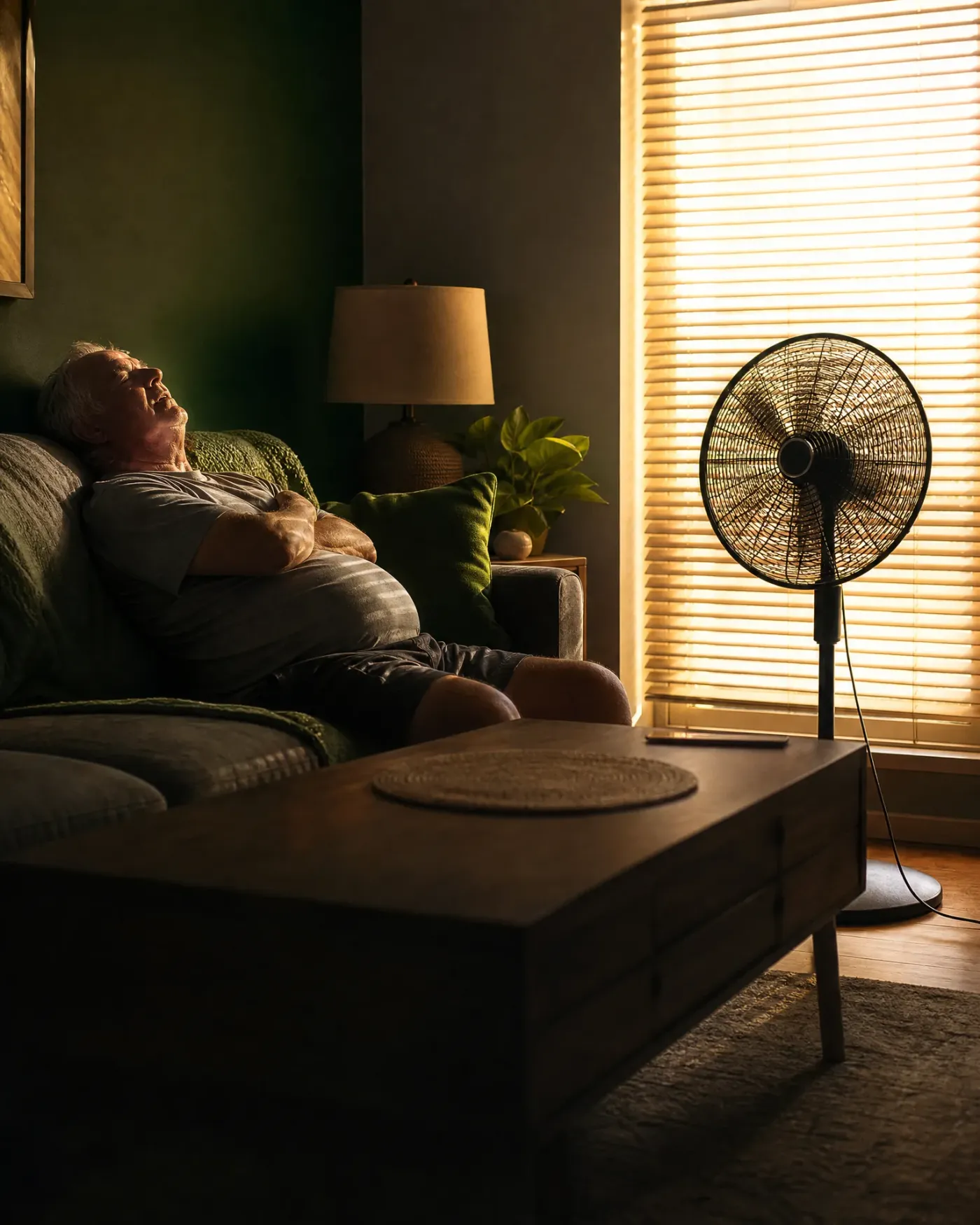


Running the way it should
A heat pump that's working sits quiet most of the time, kicking on and off as the thermostat calls for it. The lines and conduit stay clean, the pad underneath stays clear, and nothing around the unit looks disturbed.
A heat pump that won't turn on is usually stuck on a tripped breaker, a dead thermostat battery, or a safety switch that shut the system down on purpose. The outdoor unit has a float switch or pressure switch that cuts power if something is wrong, and that's often the real cause even though the problem looks electrical. In Maryland, winter is when this matters most, since most homes here heat with electricity and the heat pump is likely doing that job alone. No heat means no backup plan while you sort it out. Check the thermostat display and the breaker panel first. If the thermostat is blank or the breaker won't stay reset, the issue is inside the system itself, not something you can clear on your own. That points to a part that failed or a control board that needs a trained eye.
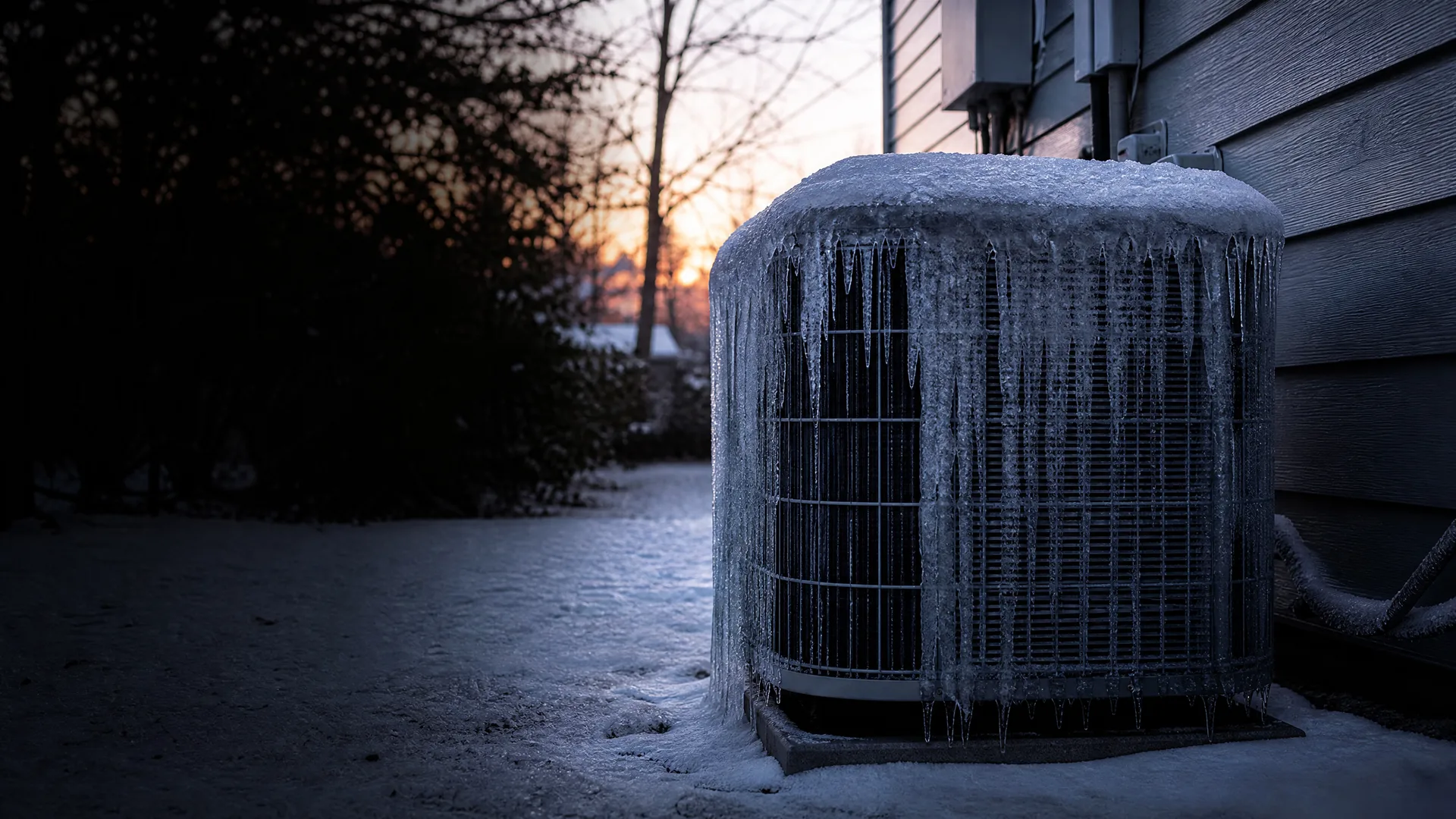
You go out for the paper a little after six and see it first from the kitchen window. The outdoor unit sits against the side yard fence with a crust of ice over the coils, thick enough that you can't see the metal fins underneath. It's been cold all week, the kind of January morning where the grass is stiff and white. The unit isn't running. No hum, no fan turning. Inside, the house has gone quiet too, the air coming through the vents barely warm. You crouch down and knock a chunk of ice loose with your knuckle, and more just sits underneath it, packed in around the base.
Thermostat calls for heat and sends power to the control board.
Control board checks every safety switch before it lets the system start.
A tripped float switch or pressure switch stops the call right there.
No fault found means the contactor energizes and the outdoor unit starts.

When the heat pump won't start, your thermostat doesn't know the difference. It still calls for heat, and if your system has backup strips, they kick in and run the house on straight electric resistance heat. That's the most expensive way to heat a Maryland home there is, and with power costing what it does here, you'll see it on the next bill whether or not you ever figured out what tripped the switch.
Finding someone to look at it shouldn't be the hard part. You could spend an evening searching contractors, calling a few, explaining the ice on the coils or the breaker that won't stay on to each one, then sitting with quotes trying to guess who's worth the call. Send the form once and that work is gone. Someone licensed for heat pumps in Maryland gets your situation and takes it from there.





Describe what your heat pump is doing once, in one form.
No charge to send it. You decide if you hire them.

A heat pump that's working sits quiet most of the time, kicking on and off as the thermostat calls for it. The lines and conduit stay clean, the pad underneath stays clear, and nothing around the unit looks disturbed.

Dust and weathering alone won't stop a heat pump. But a unit that sits dirty and ignored is also a unit nobody's been checking on, and a tripped switch or a worn part can go unnoticed for days before you realize the house has gone cold.
That clicking is the contactor in the outdoor unit trying to close and send power to the compressor. You hear it try, maybe more than once, and then nothing. It's a specific enough sound that it's worth knowing what it means before a contractor ever shows up, especially with Maryland winters leaning harder on this system than most people expect from a heat pump.
The click is the contactor, a small switch in the outdoor unit that closes to send power to the compressor. When it clicks but the compressor never starts, the power isn't reaching the compressor the way it needs to, or the compressor itself won't respond. A weak run capacitor is a common reason. It's supposed to give the compressor the jolt it needs to start spinning, and when it's weak, the contactor closes, the compressor hums or tries, and nothing happens. Low voltage from the breaker panel can cause the same thing. Either way, this isn't something to keep testing by running the thermostat up and down. With electric heat strips covering the house in the meantime, the bill keeps climbing while the actual problem sits in that outdoor unit untouched.



Summer air in Maryland sits at a dew point of 64°F on average across June, July and August, going by NOAA climate records. That's heavy air, the kind that makes your shirt stick to your back before nine in the morning. Your heat pump has to pull that moisture out of the house as much as it has to cool it, and the compressor runs long stretches to do both. A unit that's low on refrigerant or sitting behind clogged coils feels that load first, and it's often where a no-start starts: the system trips a safety switch rather than keep straining against air this wet.
NASA POWER T2MDEW county cells weighted by homes


A heat pump that trips its safety switch isn't malfunctioning. It's doing exactly what it's built to do, shutting itself down before low refrigerant or a drainage problem turns into a compressor replacement.
That's why guessing at it yourself rarely works. The switch resets once the real problem is fixed, not before, so the system stays off until a contractor finds what tripped it.
At 19.53 cents per kilowatt-hour, a heat pump that's dead won't cost you anything while it's off, but the electric strips that back it up will. Those strips run on straight resistance heat, so a stuck system doesn't just leave you cold, it leaves you paying more to stay warm.
EIA-861 2025 statewide residential average
A heat pump that won't turn on almost always traces back to the same three places: the breaker panel, the thermostat, and the outdoor unit itself. Inside that unit, a float switch or pressure switch doing its job can stop the system cold, and that's not the same as something broken. Ice on the coils, a contactor clicking without catching, a filter packed with dust, these are the signs that point to which one it is, but telling a stuck switch from a failed part takes someone who's opened up enough of these units to know the difference on sight. Until that happens, your thermostat keeps calling for heat and the electric strips keep answering it, running on straight resistance power at 19.53 cents per kilowatt-hour with none of the heat pump's efficiency behind them. Every cold night this sits unresolved is another night those strips carry the whole load alone. The fix itself might be small, a reset switch, a new thermostat battery, a cleared drain line, but finding out which one takes a visit, not a guess. A contractor who sees these units regularly can usually rule out the obvious causes and get to the real one in a single trip, which beats working through the list yourself call by call while the house runs cold and the bill runs high. That's the choice sitting in front of you right now: keep guessing, or let someone who knows these systems look at it directly.


A heat pump that won't start needs someone to find the actual cause, not a guess, and that's what a licensed contractor does in one visit. Send the form and you're done hunting for who to call, done explaining the problem over and over, done lining up quotes against each other. In Maryland, with electric heat strips carrying the house while the system sits dead and power priced at nearly 20 cents a kilowatt-hour, that's not a cost worth sitting with any longer than it takes to get someone out.
Answer a few questions instead of calling shop after shop.
There's no charge for the request.