Emergency heat is a setting on your thermostat, not a sign your heat pump is broken. Flip it on and the backup electric heat takes over completely, which costs more to run. This page gets into when that switch should actually be used and what it means if your heat pump needs it more than it should.
The emergency heat setting on your thermostat switches your system off the heat pump entirely and runs on backup electric resistance heat alone. Your heat pump moves warm air from outside even in cold weather, but below a certain temperature it can't keep up, and some systems rely on a defrost cycle to clear ice off the outdoor coil before they can work right. If that coil ices over and doesn't defrost, or if the outdoor unit itself stops running, flipping to emergency heat keeps your house warm while the heat pump is down. It's meant to be temporary. Since Maryland homes that heat with electricity are paying for every bit of that backup heat directly, leaving it on for days instead of hours shows up on the bill fast. If your thermostat switched to emergency heat on its own, or you had to switch it yourself because the outdoor unit isn't running, that's the heat pump telling you something is wrong, not a problem with the setting itself.
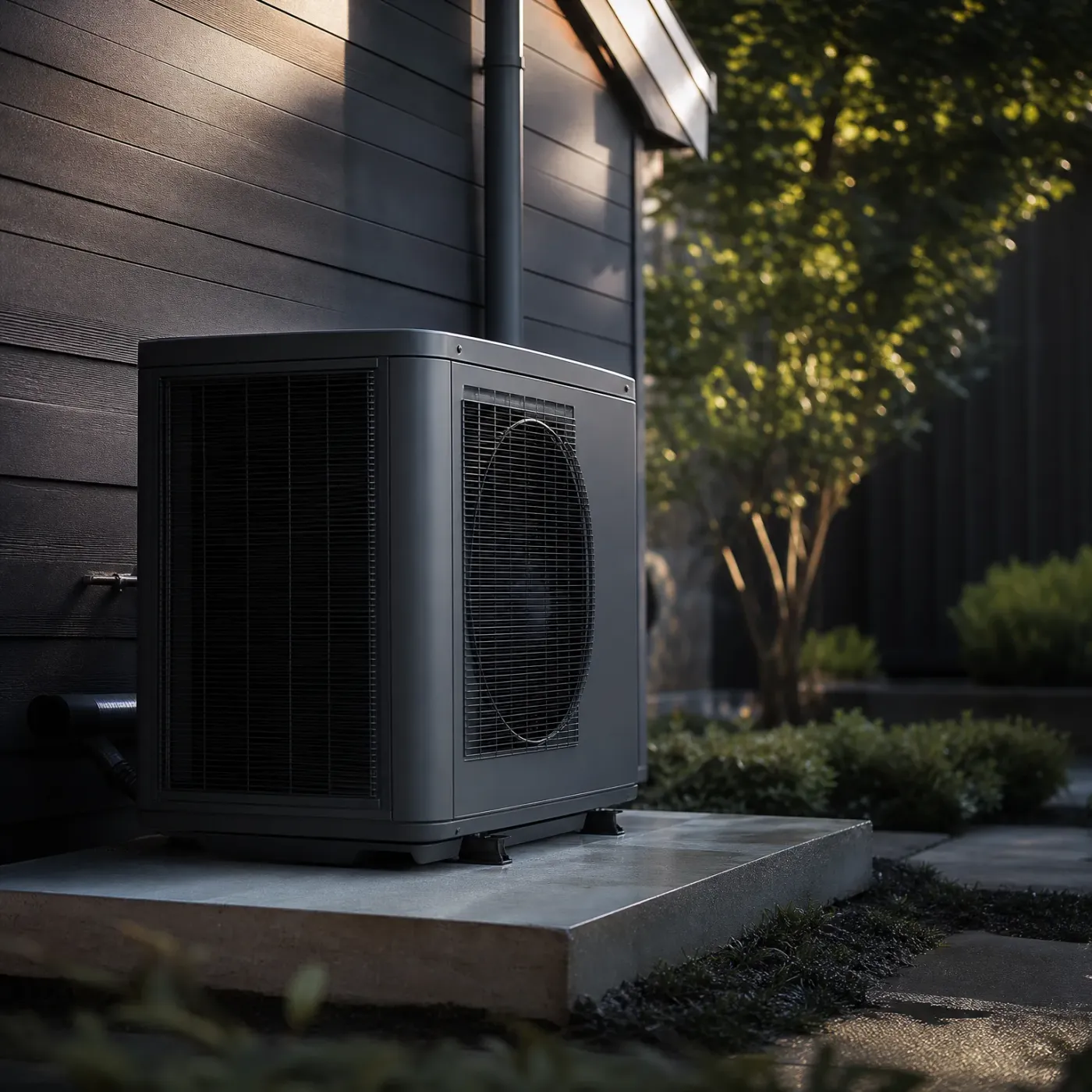
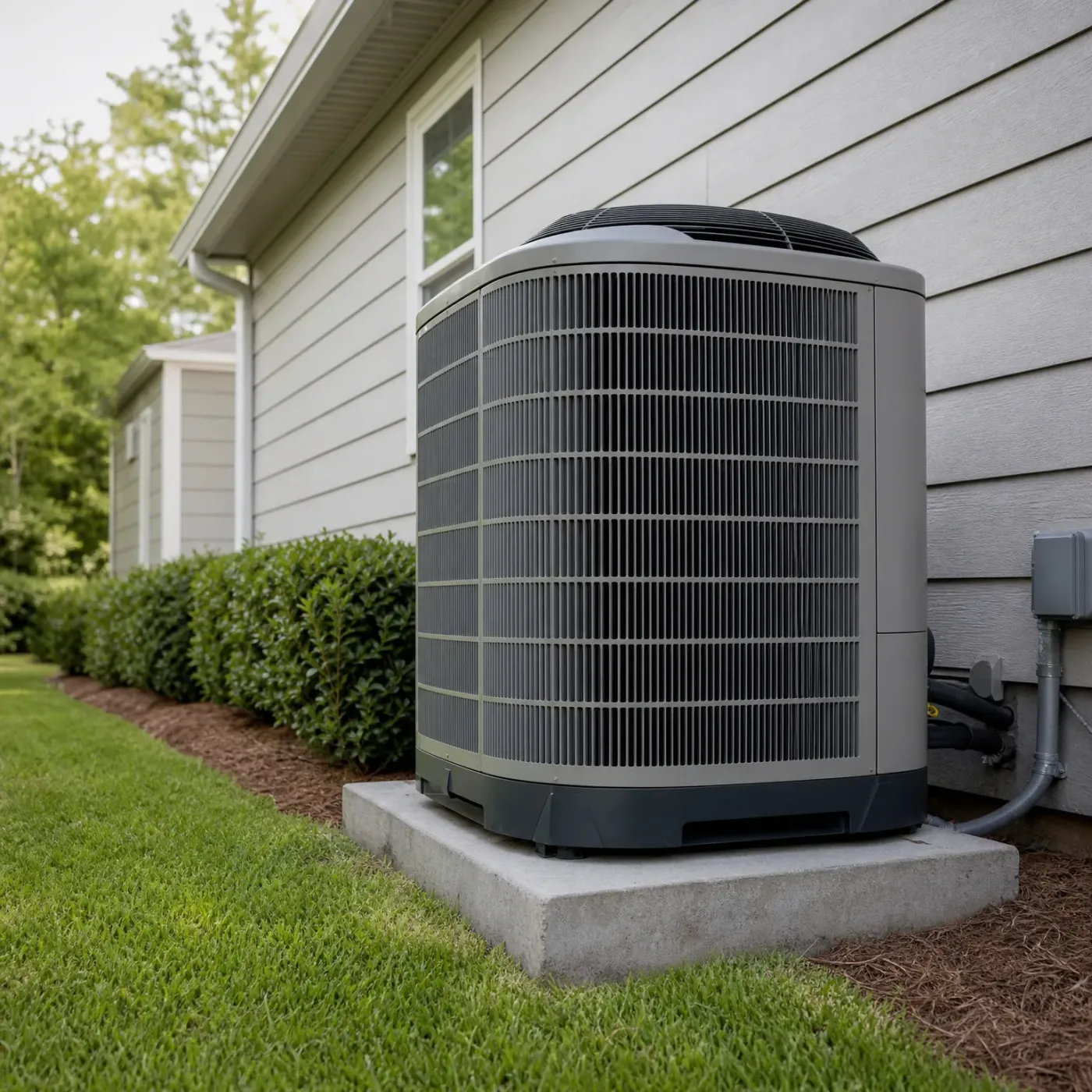
Running normally
This is what your outdoor unit should look like doing its job: clean coil fins, clear ground around the base, nothing blocking airflow. If your heat pump looks like this and the house still won't warm up, emergency heat is a tool to get through the night, not a fix.
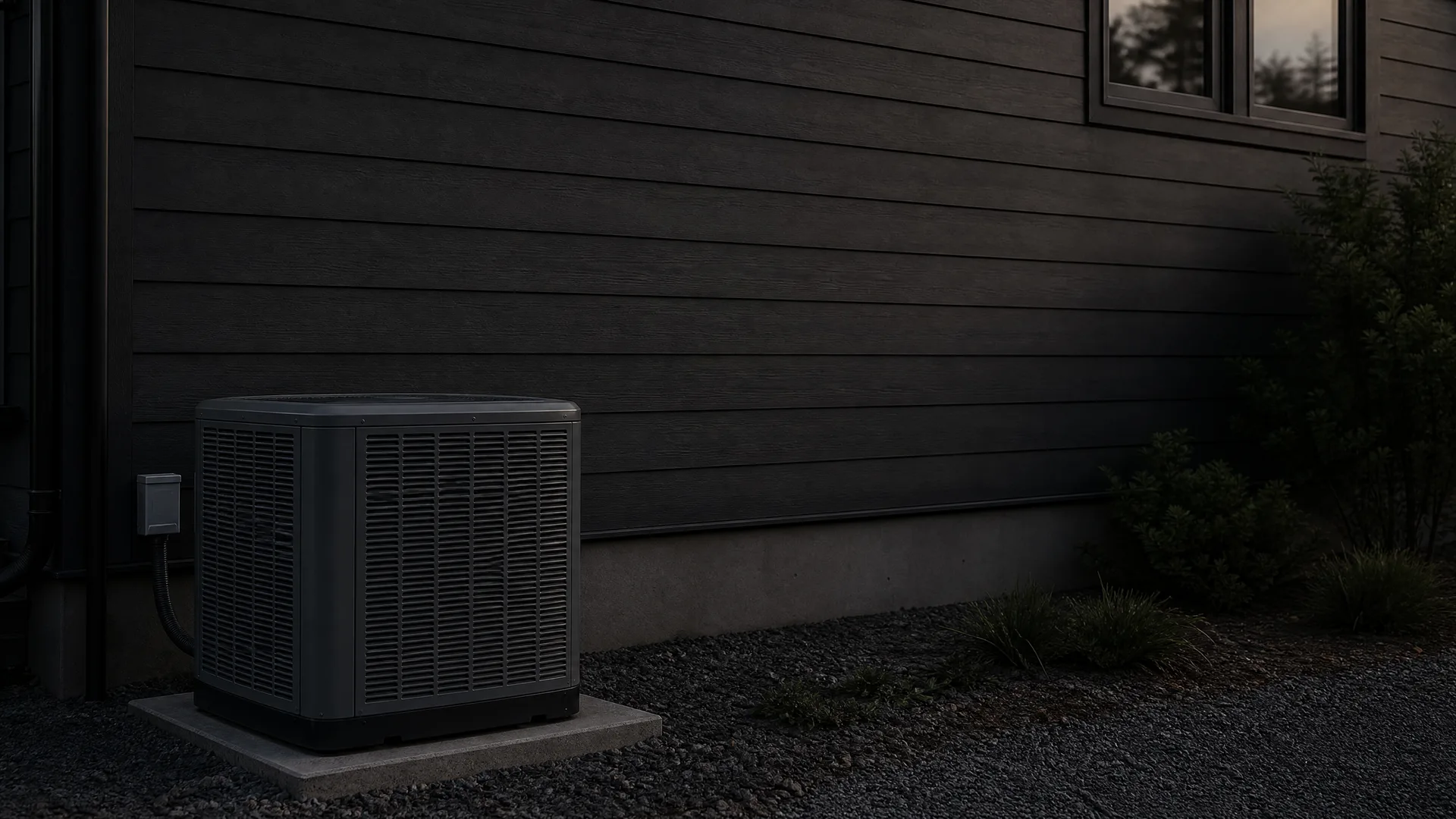
Running in trouble
Dead leaves piled against the base and coil fins caked with dirt choke off the airflow your heat pump needs to pull warmth from outside. Flipping to emergency heat will warm the house, but it won't tell you why the heat pump stopped keeping up on its own.
Why backup heat costs more
Electric resistance heat makes warmth by running electricity through a coil, the same way a toaster or a space heater works. A heat pump instead moves heat that already exists in the outside air into your house, which takes less electricity to do the same job. That's why Maryland utilities price heat pump operation lower per degree than straight electric heat. Flip the system to emergency heat and every bit of warmth in the house comes from that coil, with none of the moving-heat advantage. On a system that runs this way for days, the electric bill shows it. The setting works. It just isn't the cheaper way to heat the place.
What the switch does not fix
Emergency heat bypasses the heat pump, it doesn't repair it. If the outdoor unit is frozen over, the fan isn't spinning, or the system won't switch between heating and cooling, emergency heat keeps your home warm while that sits unresolved. Some homeowners flip it on and forget it's on, running up electric bills for weeks over a problem a contractor could have found in one visit. The setting buys you time on a cold night. It doesn't buy you a working heat pump. If yours has been stuck on emergency heat for more than a day or two, something upstream needs a look.
A pro who works on heat pumps
Describe your heat pump job once, to one pro.
Tell a local repair pro what your heat pump is doing.
If that light on your thermostat won't turn off, or your outdoor unit isn't running at all while the house stays cold, your heat pump isn't doing its job and the backup heat is carrying the whole load. You'll notice it on the electric bill first, since resistance heat costs more to run than the heat pump by itself. Check the outdoor unit. Ice building up on the coil, a fan that isn't spinning, or snow packed against the base are all reasons it can't pull heat from the outside air. Left alone through a cold stretch, that's your backup heat running nonstop to keep up, and a bill that shows it.
Before you get your heat pump repairAfter you get your heat pump repair
Emergency Heat or Let It Run
Using it as switch
You flip it on for a night or two while a repair gets scheduled, so the house stays warm in the meantime.
It costs more to run since the backup coil makes heat with electricity alone, and power in Maryland isn't cheap.
Nothing about the outdoor unit gets fixed while it's on. The heat pump just sits idle.
It's meant to be temporary, a few days at most, not a setting you leave on through a cold snap.
The thermostat light tells you it's active, so you know the backup heat is carrying the house, not the heat pump.
Leaving the heat pump running
The outdoor unit keeps moving warm air from outside into the house, which is how it's designed to run most of the winter.
It costs less than backup heat because it moves heat instead of generating it with a coil.
If it's running and the house still isn't warming up, that's the outdoor unit telling you something is wrong.
A clean coil, clear ground around the base, and nothing blocking airflow are signs it's doing its job normally.
Switching to emergency heat doesn't tell you why the heat pump struggled. A contractor checking the unit does.
Summer here isn't the season this setting is about, but it tells you something about your power bill either way. Averaged across Maryland, summer air holds a dew point of 64°F, heavy enough that your heat pump works hard all summer pulling moisture out along with heat. That same unit runs in reverse all winter, and when it's cold enough outside that it can't pull in enough warmth, emergency heat is what carries the house on electric resistance alone. Given what you already pay to run this system in August, you'll notice the difference on a bill if that backup coil stays on for more than a night or two. A system that's straining in both directions year round is one worth having looked at before either season asks more of it than it can give.
NASA POWER T2MDEW county cells weighted by homes
Emergency heat gets you through a cold night. It doesn't fix anything.
The switch itself is simple: flip it on, the backup coil carries the house, the heat pump sits idle. That part you can do yourself. What it won't tell you is why the heat pump stopped pulling its weight, and running on backup heat for days at a time in a Maryland winter adds up on the power bill while the real problem sits there unfixed.
Figuring out what's wrong, finding someone licensed to look at it, and getting a time on the calendar is the part that eats an evening you don't have. Answer a few questions about what your system is doing and you'll be matched with a contractor who works on heat pumps like yours, and they'll reach out to you directly. No calling around, no repeating the same description of your thermostat light to three different shops.
Get your heat pump to the right pro
Fill out one short form instead of calling around.