





What a heat pump tune-up covers in Maryland

Send the form and the heat pump tune-up stops being something to remember.

I'm done searching

A heat pump tune-up in Maryland covers both sides of the job, because your system runs double duty here, heating the house most of the year and cooling it through the muggy summer. A technician checks refrigerant charge, cleans the outdoor coil, tests the defrost cycle, and checks the electrical connections and amp draw on the compressor and fan motor. The defrost check matters more here than in warmer states, since a heat pump that can't shed ice off the outdoor coil will struggle to heat your home on a cold night and run up your electric bill trying. The tune-up also covers airflow, the filter, the blower, and the thermostat settings that control when the system switches between heating and cooling. Since most Maryland homes heat with electricity, a system that's losing efficiency shows up fast on your power bill. Catching a weak component before the next heating or cooling push keeps it from failing when you need it most.

A man in a gray sweater reclines in a brown leather armchair with his eyes closed, beside a wooden side table holding a mug, a folded newspaper and a potted plant, with a bookshelf and sunlit window behind him.
A man with greying hair and a dark sweater leans back on an armchair with his eyes closed and a slight smile, in a living room with a bookshelf, plant, folded newspaper and mug on a wooden table.
A man in a gray fleece jacket sits reclined in a leather chair with his eyes closed, in a room with bookshelves, a table lamp, a window, and a desk holding a folded newspaper and a dark mug.
A bearded man in a gray fleece pullover sits with eyes closed in a brown leather armchair in a living room, with a floor lamp, bookshelf, potted plants, a side table holding newspapers and a dark mug, and a bright window behind him.

Tune-Up Now or Risk It This Winter

With a tune-up

  • A technician catches a weak contactor or a dirty coil in the fall, before it fails on a January morning.
  • Refrigerant charge gets checked against the manufacturer's spec, so the compressor isn't working harder than it has to all winter.
  • The outdoor coil gets cleaned so the system can pull heat from the air efficiently even when it's cold out.
  • Electric backup heat only kicks in when it's actually needed, instead of covering for a heat pump that isn't keeping up.
  • A local contractor who services heat pumps all year knows which parts tend to go first on the units common here.
  • Defrost cycles and the reversing valve get tested, since both matter more in Maryland than in a milder climate.

Without a tune-up

  • A low refrigerant charge can go unnoticed for months, and the system just runs longer to make up for it.
  • A failing capacitor or contactor usually gives no warning before it quits, often on the coldest or hottest day.
  • A dirty outdoor coil makes the compressor work harder to move the same amount of heat, and electricity here isn't cheap.
  • The reversing valve can stick without anyone knowing until the system is stuck in one mode.
  • Backup electric heat can end up running more than it should, which shows up on the power bill before anyone finds the cause.
  • A small problem in October can turn into a system that won't heat at all by the first cold snap.
A gray outdoor condenser unit sits on a concrete pad beside a house with horizontal lap siding, with a wall-mounted disconnect box and refrigerant lines, mulched beds and a shrub nearby, and a concrete walkway in the foreground.

Running clean

This outdoor unit cycles on and off without strain. The coil stays clear, the pad is level, and the disconnect box is easy to reach if a technician needs it. A unit kept like this holds its charge and doesn't make the compressor work past what it has to.


An outdoor air conditioning condenser unit with dusty coils sits on a concrete pad against light horizontal siding, with an electrical disconnect box and refrigerant lines on the wall and a shrub and mulch at left.

Running dirty

Years of grime on this coil make the system pull more power to move the same heat, in or out of the house. Dirt holds moisture against the cabinet and the lines, and a contractor checking it cold will likely find the charge off and the contacts worn.

Is your heat pump already telling you something?

Stand by the outdoor unit. If it's icing over in January, or running long stretches without shutting off, it's working past what it should. Inside, a room that won't quite hit the temperature on the thermostat, or air coming out of the vents that feels barely warm, points the same way. So does a hiss or a clank from the outdoor unit, or a smell of burning dust the first time it kicks on for the season. None of that is normal wear. A heat pump straining like that is pulling more power to do the same job, and on Maryland's electric rates that shows up fast on the bill. Left alone, the part causing it usually doesn't fix itself.

A gray outdoor condenser unit on a concrete pad beside a house with stacked stone and horizontal siding, surrounded by gray gravel and a plain light wall.

The reversing valve is the difference

A heat pump has one part your AC doesn't: the reversing valve. It's what lets the system pull heat from the outside air in January and send it back outdoors in July. A technician checks that it shifts cleanly in both directions. If it sticks, the system can get stuck heating when you've asked for cold air, or the other way around, and that's not something you'd catch until the day it matters.

A dark gray outdoor heat pump unit sits on a concrete pad beside a white stucco wall and lap-sided house corner, with mulch and a small shrub in the foreground.

Defrost control gets checked too

Below freezing, frost builds on the outdoor coil, and the system has to shut off and melt it before it can keep heating. That cycle is run by a defrost control board and a sensor on the coil. A technician tests that it trips at the right point. If the sensor reads wrong, the unit defrosts too often and loses heat, or not enough, and ice builds up until the coil can't pull in any air at all.

What does a technician actually check during a heat pump tune-up?

You want to know what you're paying for, not just a vague "we'll inspect the system" line. If someone's coming out to your house, you want to know what they're actually going to put their hands on.

A tune-up follows a set sequence, not a quick look

A technician starts outside, checking refrigerant pressure against the system's spec and looking at the coil and fan blade for dirt or bent fins. Then the electrical side: contactor, capacitor, and the wiring at the disconnect. Inside, the indoor coil and blower wheel get checked, along with the filter. The thermostat gets tested in both heat and cool mode, since a heat pump has to switch between them correctly to be worth anything in January or July. Drain lines get checked too, so condensation has somewhere to go. Each reading gets compared against what the manufacturer specifies for that model, not just eyeballed, because a reading that's close but off tells a technician something is starting to wear.

A single-story house with light gray horizontal siding, dark gray shingled gables, black shutters and a dark front door, fronted by a mulched bed of small shrubs and a large lawn under a clear blue sky.

That mugginess in a Maryland summer isn't just uncomfortable, it's work for your heat pump. The National Weather Service puts the average summer dew point for Maryland at 64°F, which is the sticky range where air feels heavy even in the shade. Your system has to pull that moisture out of the air before the house feels cool, not just drop the temperature. That's extra run time on the compressor and more condensation draining off the indoor coil, on top of the heating it already did all winter. A tune-up checks that the coil is clean and the charge is right so it can keep up without straining. For this, it helps to have the same local technician who worked on your system in the fall come back in the spring. One person who already knows your equipment, not a different company each time.

NASA POWER T2MDEW county cells weighted by homes

Let someone else find the pro

Your heat pump doesn't get an off season here. It runs the furnace side all winter and the AC side all summer, and electric heat in Maryland isn't cheap, so a part that's slipping doesn't just risk a breakdown, it shows up on your bill every month until someone catches it. Most homeowners don't know a tune-up was overdue until the system's already struggling in July or January. Finding the right person to look at it shouldn't be its own chore on top of that. Send the request once and it goes to one contractor, someone local who works on heat pumps all year in this climate and knows which part usually goes first on a system that never really gets to rest. You're not fielding calls from a handful of companies trying to win the job. You're handing off one thing you don't have to carry anymore, and getting back to the rest of your day while someone who knows this equipment takes it from here.

Skip it, and heat lean on both sides

Go without a tune-up and the heat pump still runs, but it's working from a worse starting point in both directions. A refrigerant charge that's drifted low makes the compressor run longer to move the same heat in January and the same cooling in July. A coil with a season of dirt on it can't transfer heat as well, so the system stretches to make up for it. None of this trips a breaker or throws a code. It just means the unit runs more than it needs to, and since most homes here heat with electric, that shows up on the bill before it shows up as a breakdown. By the time something does fail, it's usually the part that was already struggling.

Keep up with it, and both seasons run easier

A technician who services heat pumps in Maryland all year knows the two failure patterns to check for: one tied to summer humidity, one tied to winter demand. Checking the charge and cleaning the coil before each season starts means the system isn't fighting itself when the weather turns. The reversing valve gets tested in both directions instead of just the one it happened to be using that day. None of this stops every repair, but it means the parts most likely to fail get caught while they're still working, not after they've quit on a July afternoon or a January morning. Fixing a problem before the weather asks everything of the system costs you less than fixing it after.

A gray-haired man with a beard in a blue button-placket shirt reclines on a couch with his eyes closed, beside a sunlit window with a green plant.
A woman in a cream knit sweater sits in an armchair with her eyes closed near a window showing yellow autumn foliage, with a mug on a round wooden side table beside her.

One technician, one visit

The contractor who gets your request knows this equipment and services it all year. You're not fielding calls from several companies, just the one who's coming out.

Hand it over

Finding someone is off your plate

Send the request and the search for a contractor stops being your job. You're matched with someone licensed and local who works on heat pumps every season.

Hand it over

Power costs 19.53 cents per kilowatt-hour statewide

At almost 20 cents a kilowatt-hour, a heat pump running inefficiently costs you more here than it would most places. A weak capacitor or a low charge means longer run times to hit the same temperature, and in Maryland that difference lands on your electric bill every single month.

EIA-861 2025 statewide residential average

What a tune-up gets you

  • A heat pump tune-up checks the same system twice over, once for heating and once for cooling, because it runs both jobs in your house.
  • The refrigerant charge, the coil, the reversing valve and the controls all get looked at, since any one of them can drag the other side down.
  • A technician who services this equipment year-round knows which part tends to go first on a heat pump that's been running since last winter.
  • One contractor takes the request and handles the visit, so you're not sorting through calls from several companies before anyone shows up.
  • Catching a weak part now keeps it off your electric bill before January or July puts real load on it.
  • You know what the visit covers going in, and that's the same list a technician works through at your address.

A heat pump tune-up in Maryland comes down to one thing: a system that's already doing two jobs gets checked on both of them, not just the one that's about to start. The refrigerant charge, the coil, the reversing valve, the controls, none of them work in isolation, and a problem in one shows up as strain in the other. That's why the order matters less than the coverage. You want someone who's been inside this equipment all year, not just when it breaks, because that's who knows a contactor is getting weak before it fails on the coldest morning of the year.

That's also where having one contractor instead of several pays off. The contractor who takes your request is local and licensed, and services heat pumps through every month of a Maryland year, winter heat and summer humidity both. That's the person who knows what tends to go first on a system that's been running since last winter, and checks for it specifically instead of working from a generic list. You're not fielding calls from three or four companies trying to win the job. One contractor gets the request, one technician does the visit, and the list they work through at your house is the same one laid out above.

None of this changes what the tune-up is. It's a look at both sides of a system that doesn't get an off season here, done by someone who already knows where this equipment tends to wear first.

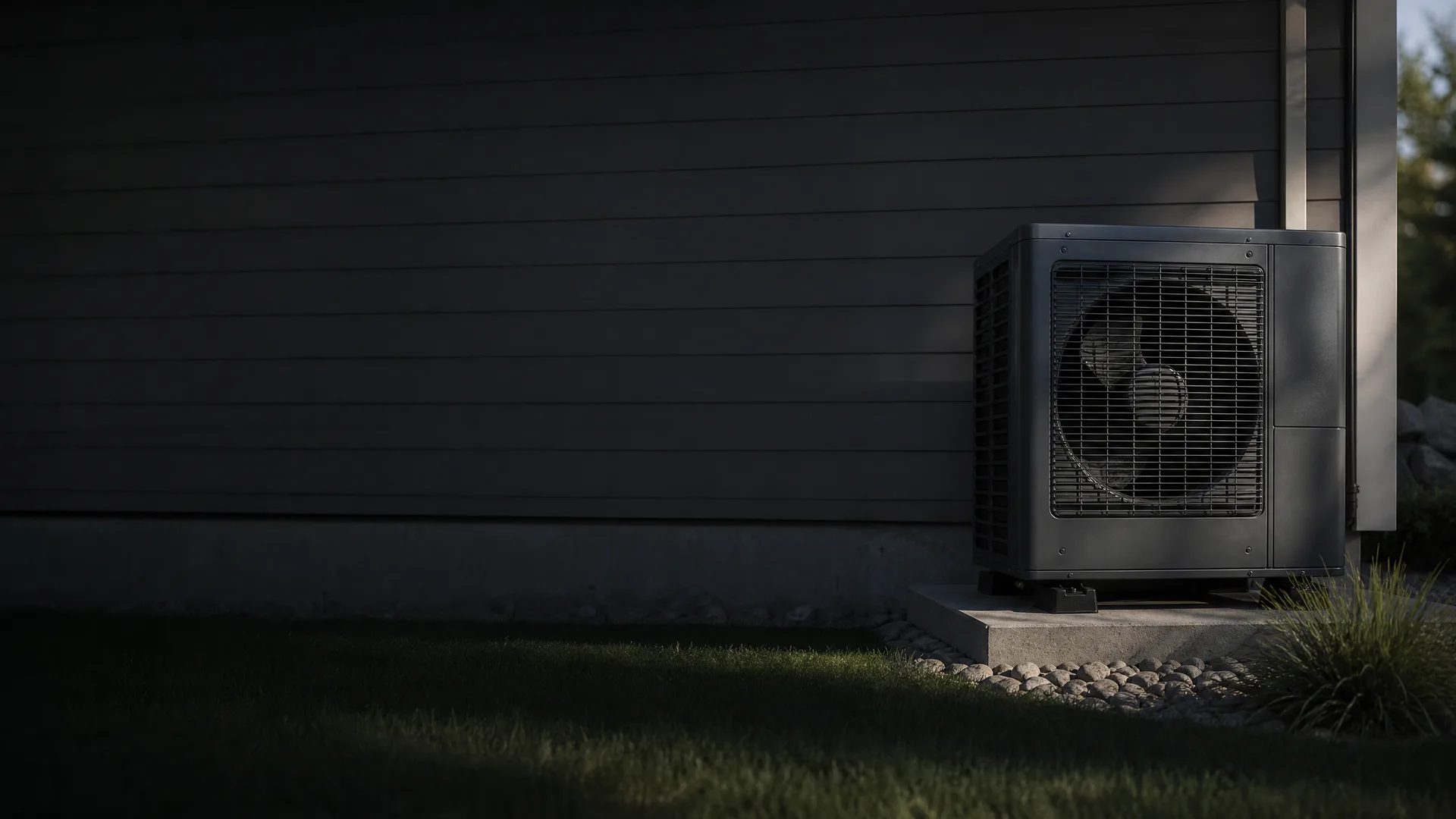
An outdoor air-source heat pump unit with a large fan grille stands on a concrete pad beside a dark horizontal-slat clad house wall, bordered by gravel, grass and an ornamental grass clump.

Done looking for a heat pump pro

Your request stays with one local pro.

Step 1 of 3: Equipment