Repair or replace a heat pump in Maryland

Send the form and stop researching installers for the new heat pump.

Hand off my installation

Should I repair my heat pump or replace it?

Your heat pump is acting up again and you're trying to figure out if it's worth calling someone out to fix it or if you should just plan on a new system before next summer. With Maryland winters leaning hard on that heat pump and electric rates what they are, a bad call either way costs you for years, not just one season.

Repair it if it's under 10 years old, replace it if it's older or the compressor has failed

A heat pump works twice as hard in Maryland as it would somewhere milder, running the house through both summer's humidity and winter's cold since most homes here heat with electricity instead of gas. That extra work shortens its life. Past 10 years, a repair bill of any size is money put into a system that's already most of the way through its life, and a compressor failure at that age almost always means replacement is the better math. Under 10 years, repairs usually make sense, especially for common failures like a bad capacitor or low refrigerant charge. The exception is a heat pump still under warranty, where a failed part costs you little beyond a service call.

A gray outdoor condenser unit on a concrete pad beside a light green lap-sided house, with a wall-mounted electrical disconnect box, mulch bed with shrubs, river rock, and a paved walkway in the foreground.

Still running fine

If your heat pump is keeping the house comfortable and the repair is small, a licensed local contractor can likely fix it and send you into next summer without a new system. Clean coils, a working disconnect, and a unit that cycles normally are all good signs.

An outdoor air conditioner condenser unit on a concrete pad beside a house with horizontal lap siding, with refrigerant lines entering the wall and a shrub on bare soil to the left.

Struggling to keep up

Dirty, clogged coils like these make a heat pump work harder to move heat, and in Maryland that shows up fast on an electric bill. If the coils are caked with debris or the lines look worn, a contractor who sees this every season can tell you whether it's worth fixing or time to replace.

Fix It Now or Replace It

Repair

  • A capacitor, a contactor, or a defrost board failure usually runs a few hundred dollars and gets the unit back to full output the same visit.
  • If the heat pump is under ten years old, parts are more likely to still be covered under manufacturer warranty, which keeps the repair bill down.
  • A unit that still hits its rated output and holds the set temperature through a Maryland winter night is worth keeping going.
  • Refrigerant leaks can often be found and sealed without replacing the outdoor unit, especially if the coil itself is sound.
  • Repairing now buys time to plan a replacement on your own schedule instead of during a breakdown in January.

Replace

  • A heat pump that's needed two or three service calls in the past year is costing you in both repair bills and higher electric use from running inefficiently.
  • Compressor failure on an older unit often costs close to what a new system would, since the compressor is the most expensive part to replace.
  • Newer heat pumps hold their rated output in cold weather better than units built even ten years ago, which matters when Maryland temperatures drop below freezing.
  • If the system uses R-22 refrigerant, replacement is the only real option since that refrigerant is no longer produced.
  • Replacing before the unit fails outright means you choose the install date instead of going without heat during a cold snap while parts get ordered.
  • A new heat pump sized correctly for the house can lower the electric bill enough over a few winters to offset a good part of the install cost.
An outdoor air conditioning condenser unit on a concrete pad beside a dark horizontal-siding wall and a brick wall, with flowering shrubs and grass nearby.

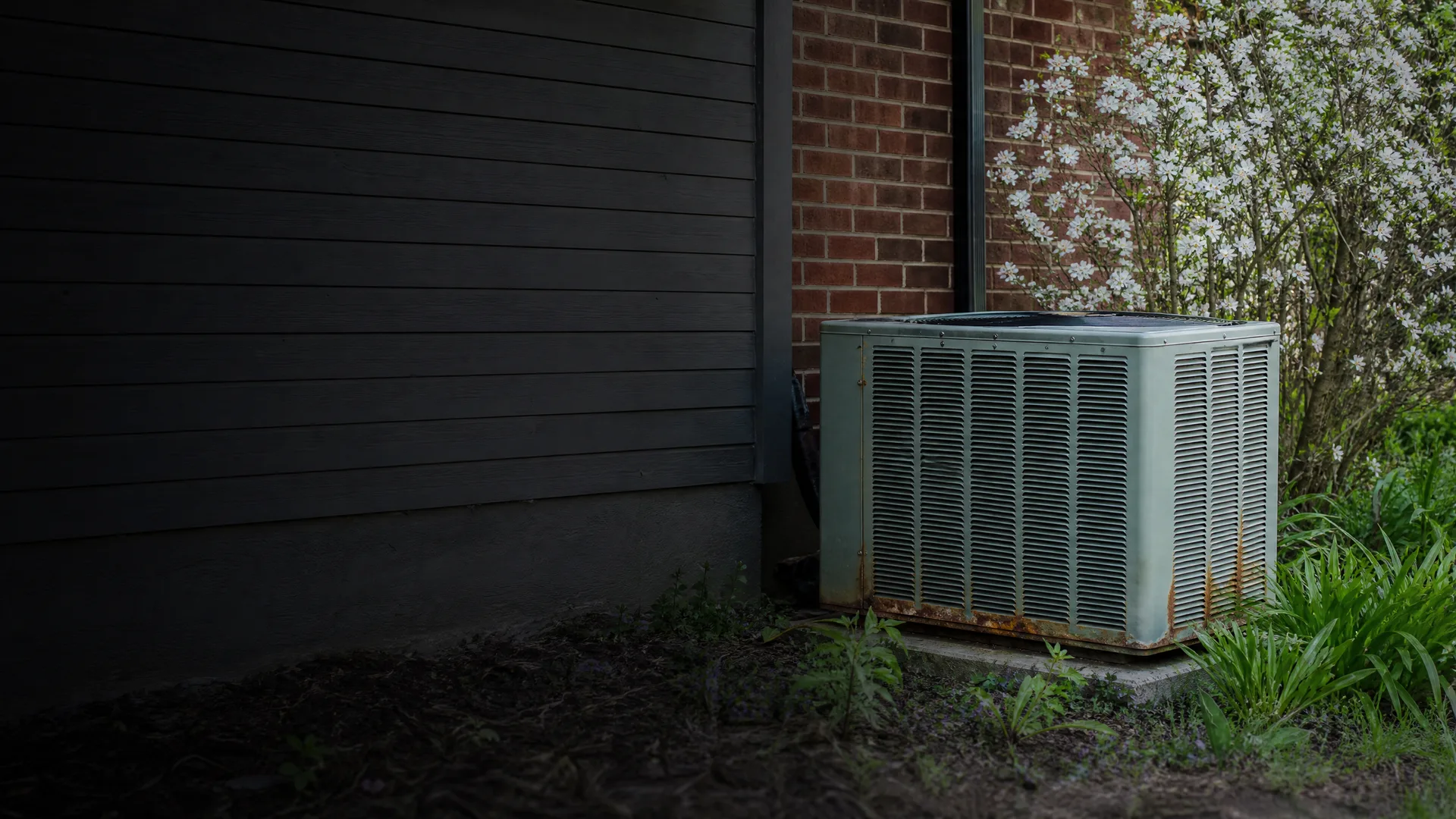
You walk out to the side yard to check the unit before the heat really sets in. It's one of those mild March afternoons, jacket weather in the morning, warm enough by two that you notice the AC hasn't run yet this year. The cabinet is old, rust creeping along the base where the metal meets the pad, and when you crouch down you can see it's worked its way past the paint. You give the fan a look, listen for the hum. It starts, but slower than you remember. You think about the muggy months coming and whether this thing has one more summer in it, and you head back inside to look up someone who can tell you for sure before you're stuck deciding in July.


One request and it's handed off

A heat pump carries more weight in a Maryland home than it would somewhere with gas backup. It's doing the heating from October through winter and the cooling through those sticky summer months, and when it's struggling, the electric bill shows it fast. If you've been going back and forth on this one, that's reasonable. It's not always obvious from the outside whether a unit is worth saving. What usually settles it is someone standing in front of the thing, checking the coils, the refrigerant charge, the board, and telling you straight what's wearing out and what still has life in it. A contractor who works on heat pumps in this area all year, through the humid months and the cold snaps both, has seen which parts give out first on units like yours and what that tends to mean. Send the request and that question stops sitting on your plate.

A heat pump that's low on refrigerant or running on a failing compressor has to work harder to move the same amount of heat, and in Maryland that shows up on the electric bill within a month.

A new system sized right for your house won't fix a bill that's already climbing from a problem a repair can solve, so the fix has to match what's actually wrong, not just the age on the nameplate.

A man in a blue sweatshirt reclines with closed eyes in a brown leather armchair in a living room with a bookshelf, houseplant, sofa, window, and a side table holding newspapers and a dark mug.
A bearded man in a gray pullover reclines with closed eyes on a brown leather sofa in a sunlit room with a window, framed picture, potted plant, and a wooden cabinet holding papers and a dark mug.
A man in a gray sweater leans back with closed eyes in a brown leather armchair beside a wooden side table holding a dark mug and a folded newspaper, with bookshelves and a window seat behind him.
A man in a green sweater reclines in an armchair with his eyes closed and a slight smile, beside a window with plants, a small table holding a mug and folded newspaper, and bookshelves behind him.

Calling someone out

You describe the problem, wait to see who's available, and hope the first contractor who answers actually works on heat pumps.

Find a licensed heat pump pro

One licensed local match

You send one request and a local contractor who works on heat pumps all season, and knows what usually fails on them, gets in touch. No juggling several calls.

Find a licensed heat pump pro

Why does the house feel off lately

You notice a room or two that never quite gets warm, or the air coming out of the vents feels cool when it should feel warm. Maybe the outdoor unit is running longer than it used to, or it's caked in ice during the day instead of just overnight. Some homeowners hear a clicking or buzzing from the outdoor cabinet before it kicks on, or the system short cycles, running a few minutes then shutting off. Since a heat pump does both your heating and cooling here, a unit that's struggling pulls more electricity to do the same job, and that shows up on next month's bill before it shows up anywhere else.

A gray outdoor condenser unit on a concrete pad beside a house with horizontal lap siding, connected by conduit and lines to a wall-mounted disconnect box, with a shrub and gravel bed to the left.
A clean unit with clear airflow around it is one a contractor can often repair and send into next summer.
An outdoor air conditioner condenser unit on a concrete pad beside a house with horizontal lap siding, with refrigerant lines and a gray electrical disconnect box on the wall, surrounded by bare dirt.
Years of dirt packed into the coil guard make the compressor work harder, and that's when replacement starts to make more sense.
  1. A contractor checks refrigerant pressure against the manufacturer's charge chart

  2. The reversing valve is tested to confirm it switches between heat and cool

  3. The defrost board and sensor are checked for a proper defrost cycle

  4. Amp draw on the compressor is measured against its rated load

An outdoor air conditioner condenser unit with rust spots on its top grille sits on a concrete pad beside a house with light horizontal siding, with conduit lines and an electrical box on the wall and a mulch bed to the right.
Before you get your heat pump installation
A gray outdoor condenser unit on a concrete pad beside a light-colored lap-sided house, with a wall-mounted disconnect box, refrigerant lines, mulch bed and shrubs, and a concrete walkway in the foreground.
After you get your heat pump installation
A two-story house with gray and light gray siding, white-trimmed windows and a white front door, flanked by deciduous trees, with a partly browned lawn in front under a clear blue sky.

Summer air here averages a dew point of 64°F across June, July and August, according to NOAA climate data. That's sticky enough that your heat pump isn't just cooling the house, it's pulling a lot of moisture out of the air to keep it comfortable. A unit that's low on refrigerant or has a weak compressor falls behind on both jobs at once, so the house feels cool but damp, and the system runs longer to get there. If you've noticed rooms that feel clammy even with the AC on, that's the moisture, not just the temperature.

NASA POWER T2MDEW county cells weighted by homes

An older man with gray hair and a beard leans back on a beige sofa with his eyes closed, in a sunlit room with potted plants, a wicker chair and large windows behind him.
A woman in a cream knit sweater sits in an armchair with her eyes closed and a slight smile, beside an open window showing orange autumn foliage, with a mug, books and a lit candle on a small side table.

Power costs 19.53 cents per kilowatt-hour statewide

Since your heat pump runs double duty, heating the house most of the year and cooling it in summer, every inefficient hour adds up at 19.53 cents per kilowatt-hour. A unit that's lost capacity or short cycles doesn't just run longer, it runs longer at that rate, month after month.

EIA-861 2025 statewide residential average

A small repair with a unit that still cycles normally is worth fixing. A compressor on its way out, a cabinet rusted through, or a bill that keeps climbing no matter what gets replaced is worth replacing. Either way, the next step is the same: get someone out who can look at your unit and tell you which one you're dealing with. Send one request and you're matched with a single licensed Maryland contractor, not a handful of companies competing for the callback, someone who works on heat pumps all season and has seen what usually gives out first in a system like yours. Once that request is in, the job of finding someone to call is done. You're not stuck weighing repair against replacement on your own, and you're not left guessing whether the contractor who shows up actually knows this equipment. That part is handled. What's left is a straight answer about your unit, from someone local who deals with this all winter and all summer, so you know where you stand before next season asks anything of it.

A gray outdoor condenser unit on a concrete pad beside a house with horizontal lap siding, bordered by mulch, shrubs and a mowed lawn.

It's off your list after this

Step 1 of 3: Equipment