Profile view of a bearded man wearing a dark green baseball cap and a dark gray T-shirt against a plain light background.

How long heat pumps last in Maryland

Step 1 of 3: Equipment

How long do heat pumps last in Maryland?

Your heat pump runs double duty here, since it covers both the heat all winter and the AC through Maryland's sticky summers. With electricity rates what they are, you're probably watching that system closer than most and wondering how many more years you can expect out of it before replacement is on the table.

Most heat pumps in Maryland last 10 to 15 years

A heat pump here works harder than it would somewhere with a mild winter, since it's running nearly year round between summer cooling and winter heat instead of sitting idle half the year. That steady use wears on the compressor and the outdoor unit faster than a system that only runs part of the year. Most heat pumps in Maryland hold up for 10 to 15 years, and where yours lands in that range depends on how well it was sized for the house and how consistently it's been serviced. A unit that's short cycling, running loud, or struggling to keep up on the coldest or hottest days is probably nearing the end of that range, even if it hasn't fully failed yet.

A gray outdoor heat pump unit on a concrete pad beside a house with gray horizontal siding, with conduit and an electrical box on the wall and a shrub at left.

Why the compressor wears faster here

A heat pump's compressor runs almost every day of the year in Maryland, since there's no real off season for it. Through the winter it's pulling heat from the outside air, and through the summer it's pushing heat back out for the AC side. That's more run hours than a furnace and AC pair ever sees, because that pair splits the work between two separate machines instead of asking one to do both.

An outdoor air-source heat pump unit with a dark grille stands on a concrete pad beside a white wall and wood-clad facade, surrounded by gravel.

What the outdoor unit is up against

The outdoor unit sits outside all year, through summer humidity and winter cold alike, and that coil has to shed moisture and resist corrosion in both. Leaves, grass clippings and ice can all block airflow across it at different times of year. A unit kept clear of debris and checked before each heavy season tends to hold up better than one left to run untouched.

Repair the Heat Pump or Replace It

Keep it running

  • A heat pump that gets its coils cleaned and its filter changed on schedule can still reach 15 years even working year round in Maryland.
  • Routine service catches a weak capacitor or low refrigerant charge before it strains the compressor further.
  • Staying with the same unit means no change to your ductwork or electrical setup, since everything already matches.
  • If the system is under 10 years old, repair costs usually run well below what a new install would cost.
  • A unit that's part of the house's original equipment may still have some life left if it's been maintained.

Replace it now

  • A heat pump past 12 to 15 years working double duty in Maryland is closer to the end than the start.
  • Newer units carry higher efficiency ratings, which matters most in a state where electricity rates are high and the system runs constantly.
  • Repeated repairs on an aging compressor add up and still leave you with the same worn-out unit afterward.
  • A failing heat pump in the middle of a Maryland summer leaves you without AC until it's fixed or swapped.
  • Replacement lets you size the new system correctly if the old one was never quite right for the house.
A gray-haired, bearded man in a dark coat dusted with snow stands smiling in a dimly lit room with a lamp, mirror, framed art, and a sofa in the background.
An older man with white hair and a beard, wearing a dark snow-dusted coat and scarf, stands in a warmly lit interior hallway with a framed landscape picture, a table lamp and a potted plant behind him, and a snowy view through a window at left.
An older man in a dark snow-flecked overcoat and scarf stands smiling in a warmly lit home entryway, with a glass-paned door showing darkness outside and a lamp-lit room visible through a doorway behind him.
An older man with gray hair and a beard, wearing a dark snow-dusted jacket and scarf, stands smiling in a warmly lit interior hallway with a lit table lamp, a vase of dried branches, and a framed picture in the background.

Get the right pro for your heat pump

A heat pump working this hard, all year, with no real break, is not a system you want to gamble on once it starts slipping. If yours is pushing past that 15 year mark, or it's running longer and louder than it used to, that's the compressor telling you something. Maryland summers won't let up, and neither will your winters, so a system on its last stretch tends to fail at the worst possible time, usually when it's working hardest. Replacing it before that happens means you pick the timing instead of the weather. A new heat pump sized right for your home and installed well can carry you another 15 years or more without the strain your current one is showing. Getting matched with a contractor who knows Maryland installs means you're not the one tracking down who's available or who does this work well. That part comes off your plate once you send the request.

What you'll notice first

The thermostat setting stops matching how the house feels. You'll ask for 70 and get a room that sits at 74, or the system runs long stretches without ever quite catching up. Some homeowners notice the outdoor unit icing over in January or struggling to shed heat in July. None of this means the heat pump has quit. It means it's working harder to do what it used to do without strain, and that strain shows up on the electric bill before it shows up as a breakdown.


What a worn system costs you

A heat pump losing efficiency doesn't fail outright, it just pulls more power to deliver less comfort. In Maryland, where electric heat is the norm and rates aren't cheap, that difference lands on the bill every month, all winter and all summer. Put off a look at it and you're paying twice: once in higher bills while it limps along, and again when the compressor finally gives out and takes the whole system with it, usually on the hottest or coldest week of the year.

An outdoor air conditioner condenser unit on a concrete pad beside a house with horizontal siding, with conduit, cables and an electrical box on the wall and mulch beds at either side.
Before you get your heat pump installation
A light gray outdoor heat pump unit mounted on a concrete pad beside a house with horizontal lap siding, with refrigerant lines and conduit running to a wall-mounted electrical box, gravel and a leafy shrub nearby.
After you get your heat pump installation

A heat pump moves heat, it doesn't make it, and that's what makes the defrost cycle worth understanding. When outdoor coil temperature drops low enough, frost builds on it, the same way it would on anything cold sitting outside in winter. The system reverses itself for a few minutes, running like an AC in the dead of winter, sending heat outside to melt that frost off the coil. That's why you'll sometimes see steam rising off the outdoor unit even when it's 30 degrees out. It's not a malfunction. It's the system clearing itself so it can keep pulling heat from the air. An outdoor unit that stays caked in ice well after a defrost cycle should have finished is a sign something's off, often a stuck reversing valve or a sensor that's failing to tell the system when to switch. Left alone, that extra strain on the compressor during repeated, incomplete defrost cycles is the kind of wear that shortens a heat pump's working life faster than age alone would.

A gray outdoor condenser unit on a concrete pad beside a house with horizontal lap siding, with an electrical disconnect box and insulated refrigerant lines on the wall, gravel in the foreground and a planting bed at left.
A clean unit with clear airflow around it holds its charge and keeps the compressor running at a normal load for its full 15 years.
A weathered gray outdoor condenser unit sits on a concrete pad beside a house with horizontal siding, with refrigerant lines entering the wall at left and a mulched shrub bed at right.
Years of dirt packed into the fins make the compressor work harder for the same heat, and that strain is what ends a unit early.

Power costs 19.53 cents per kilowatt-hour statewide

At almost 20 cents a kilowatt-hour, every extra year you squeeze out of your heat pump is money back in your pocket, since this system runs on electricity alone for both heat and AC. A unit straining to keep up costs more to run before it ever breaks down.

EIA-861 2025 statewide residential average

A woman wrapped in a cream textured blanket sits in an armchair beside a lit lamp and a dark window, with an open book in the foreground.
A smiling older woman with gray hair in a cream knit sweater stands in a dimly lit kitchen beside a window showing snow outside, with a round loaf of bread on the counter in the foreground.
A woman in a cream sweater and jeans stands in the open doorway of a white stucco house, holding the dark door, while a man in a dark quilted jacket seen from behind walks toward the entry past potted plants.

Most heat pumps in Maryland run 12 to 15 years

A heat pump that's kept clean and serviced can reach that mark even running every day of the year here. One that's been neglected, or one that's been straining to keep up with Maryland's humidity and cold snaps for a while, can fall short of it. Where yours lands depends on how it's been maintained and how hard it's had to work, not just the number on the install date.

If your system is already past 15 years, or it's showing the signs that come with age, that's worth acting on rather than waiting out. Submitting your information connects you with a contractor who installs heat pumps suited to what your home actually needs, and that contractor will reach out to you directly. You won't be the one tracking down who's available or who does this kind of work. That part is off your plate once you send it.

Interior corner with a beige sofa holding a dark green and a light cushion and a textured throw, a potted small-leaved tree beside a white-framed window, and a dark shallow bowl on a wooden coffee table in the foreground.
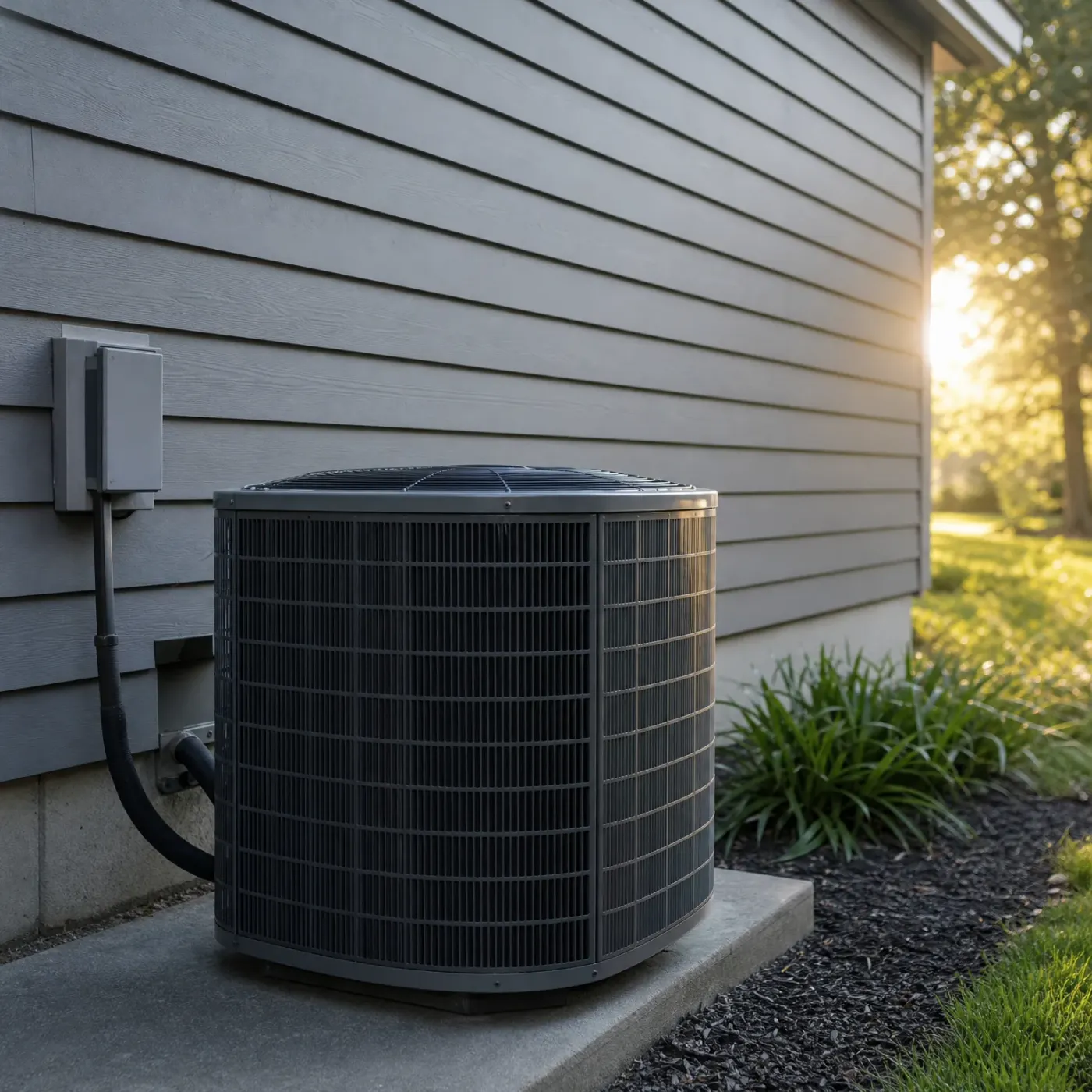
An outdoor air conditioner condenser unit on a concrete pad beside a gray horizontal-lap-sided house, with an electrical disconnect box and refrigerant line on the wall, grass, shrubs and a tree with low sun behind.

A pro who works on heat pumps

Request a pro

One request and the search for a pro is handled.

You're not committing to anything by asking.