
How cold is too cold for a heat pump in Maryland

Step 1 of 3: Equipment

How cold is too cold for a heat pump in Maryland?

Maryland winters bring real cold, and you've probably heard that heat pumps struggle once the temperature drops. If you're relying on one to heat your home, it's worth knowing exactly when that happens, and what it means for your comfort and your electric bill once the cold settles in for good.

Most heat pumps lose efficiency below 30 to 35 degrees, and struggle to keep up below 20

A heat pump pulls heat from the outside air, so the colder that air gets, the harder it has to work to pull any heat from it at all. Once temperatures drop into the low 30s, output starts to fall off, and below 20 degrees most units can't keep up with the house on their own. That's when a backup heat source has to pick up the slack. Maryland winters routinely dip into that range, especially from December through February, so a heat pump here is rarely working alone all winter. The backup is usually electric resistance heat, and since power is expensive here, those cold snaps are when a heating bill climbs the most.

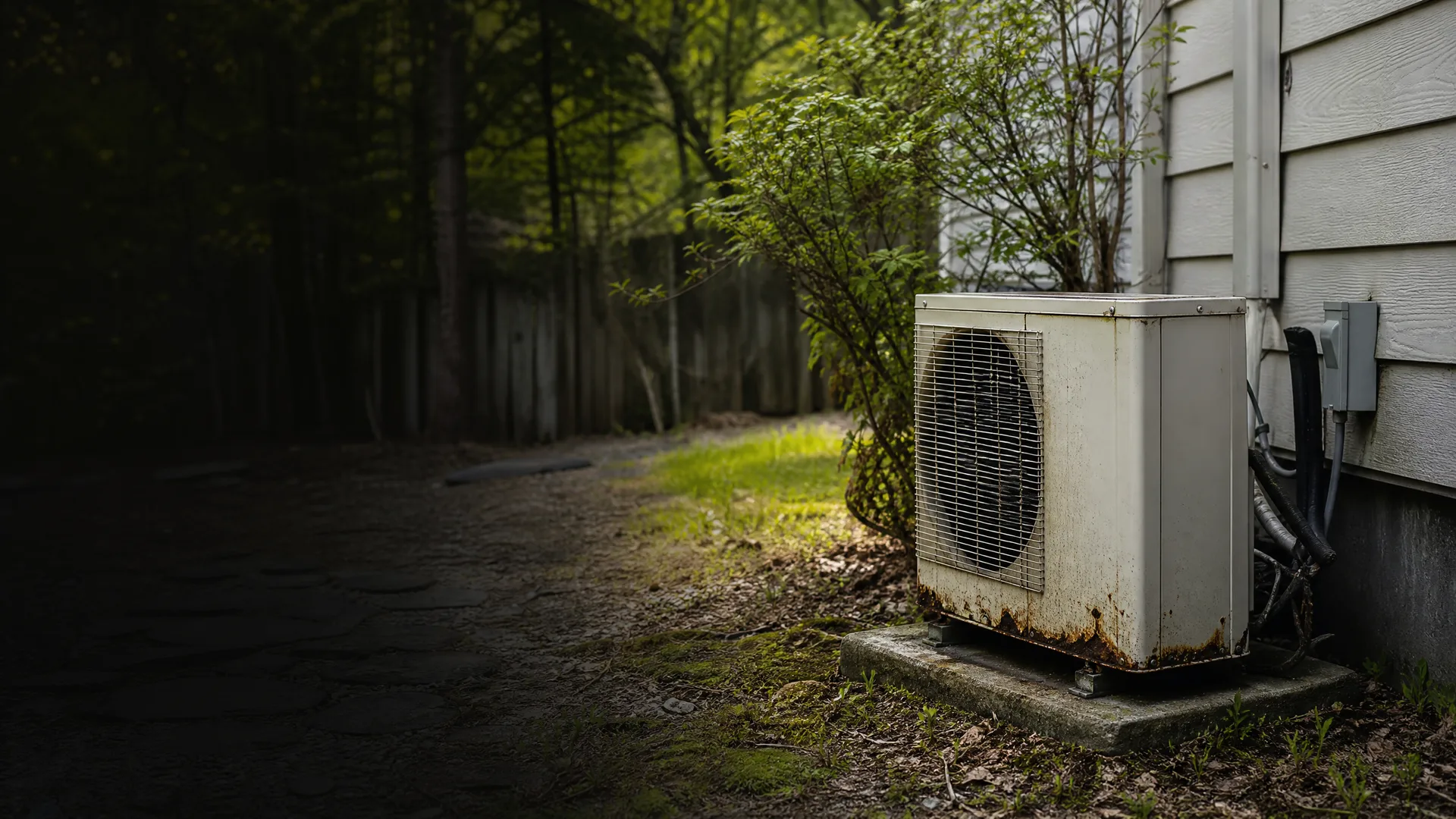
A weathered, rust-streaked outdoor heat pump unit on a concrete pad beside a house with horizontal siding, with shrubs, moss and a dim wooded yard and fence to the left.

You're out in the side yard on a mild spring afternoon, finally getting around to raking up what winter left behind. You stop near the outdoor unit and notice the rust creeping along its base, more of it than you remembered from last year. It ran hard the past few months, and it shows. You crouch down and give the base a light tap, just to see how solid it still feels. Nothing's broken, nothing's leaking, but you find yourself doing the math on how many more winters this one has in it before you're dealing with a bigger problem in the middle of January.

Why does your heat pump feel useless on the coldest nights

You notice it most around bedtime. The air coming out of the vents feels cool instead of warm, even with the thermostat set high. The outdoor unit is running, sometimes nonstop, but the house still isn't catching up. You might hear the system switch over, a click followed by a different hum, as backup heat kicks in to cover the gap. That backup strip heat pulls a lot of power, and since most homes here heat with electric, that's the bill you'll see next month. If the unit can't keep up and the backup heat isn't working right behind it, the house loses ground on the coldest stretch of the year, right when you need it most.

A gray outdoor condenser unit sits on a concrete pad against a house wall with horizontal siding above a stone veneer base, with an electrical disconnect box and conduit on the wall and a leafy shrub in mulch to the left.

Running normally

On a mild day, the unit cycles on, runs for a while, then shuts off once the house reaches temperature. You don't hear it straining, and the air from the vents feels warm. That's a heat pump working the way it's built to, pulling heat from outside air that still has enough warmth to give up.


An outdoor air conditioner condenser unit on a concrete pad beside a house with horizontal siding above a concrete block foundation, with insulated refrigerant lines and a vertical white pipe on the wall.

Struggling in the cold

Below freezing, the same unit runs longer and more often, and the air at the vents feels cooler than the thermostat setting suggests. Frost can build on the outdoor coil faster than the defrost cycle clears it. Rust along the base and worn refrigerant lines are signs it's been working harder than it should for a while.

A woman with long gray hair wrapped in a checked blanket sits on a sofa by a window with yellow autumn foliage outside, with a lamp, framed picture and plant in the background.
An older woman in a cream knit sweater sits on a sofa by a window, looking out at sunlit trees with yellow and orange autumn leaves, with a bookshelf and lamp behind her.
A woman with gray shoulder-length hair in a dark knit sweater sits on a cushioned seat by a window, looking out at yellow autumn foliage, with a living room, armchair, houseplant and framed picture behind her.
An older woman with gray hair in a bun, wearing a cream knit sweater, sits on a sofa with a gray blanket and looks out a large window toward yellow-green autumn trees, with a lit table lamp and dark armchair behind her.

The right pro for this job

One installer gets your project, so there's no bidding war over it.

No fee to send it, and nothing to sign.

What the balance point means

Every heat pump has a balance point, the outdoor temperature below which it can't pull in enough heat to keep up with the house on its own. For most heat pumps, that point lands somewhere in the 30s. Above it, the system heats the house by itself. Below it, backup heat kicks in to cover the difference, usually electric resistance coils built into the air handler. That's not a sign of failure. It's the system doing what it was designed to do once the outdoor air gets too thin on heat to pull from. In Maryland, you'll see that backup heat switch on during the coldest stretches of January and February.

Why the backup heat costs more

Electric resistance heat warms the air directly, the same way a space heater does, instead of moving heat the way the compressor does. It can keep the house warm at any outdoor temperature, but it uses a lot more electricity to do it. With power costs in Maryland already high, a few cold nights of backup heat running alongside the compressor can show up clearly on the bill. A heat pump sized and installed correctly for your house will lean on that backup heat less, because its balance point sits lower and it can pull double duty longer before handing off to the coils.

Power costs 19.53 cents per kilowatt-hour statewide

At 19.53 cents per kilowatt-hour, every degree your heat pump has to make up on a cold night shows up on the bill fast. Once the backup heat strips kick in below the balance point, they're pulling raw electricity to do it, and that's the expensive part of running one here.

EIA-861 2025 statewide residential average

So the cold itself isn't the problem. A heat pump in Maryland starts losing ground somewhere in the 30s, and once it's below that, backup heat picks up the rest at a real cost on your bill. What matters is whether the system installed in your home was sized and set up to handle that, because a unit that's undersized or wired wrong leans on backup heat far more than it should. That's a question for someone who installs these year-round in this area and knows what a properly matched system looks like here, not a general guess. When you request a match, you're connected with one licensed local contractor, not a handful competing for your business, so the person who calls you is someone who can actually look at your setup and tell you where it stands before next winter.

Corner of a house with light horizontal lap siding, a white gutter and downspout, and a window, beside a mulched bed with small shrubs, a lawn, wooden fence and trees in the background.
Close-up of a white gutter along an asphalt-shingle roof edge with dry brown leaves collected in it, a downspout and lap siding below, and blurred autumn trees in the background.
Exterior corner of a house with horizontal lap siding above a stone veneer base and a dark-framed window, with ornamental grasses and shrubs in the foreground and trees in low sunlight behind.
A white horizontal-siding house with a steep gray shingled gable roof, fronted by trimmed shrubs, a brick walkway, and a lawn scattered with fallen autumn leaves.
Corner of a house with cream horizontal lap siding, a black-framed window, asphalt shingle roof with dark fascia, white hydrangea blooms and green shrubs below, and a leafy tree and wood fence to the right.

Matched to your heat pump job

The pro who reaches out is licensed in Maryland.

Find a local pro

Sending the form costs nothing.








